


Blog
Herbal Medicine for Piles: What’s a Natural Treatment That Actually Works?

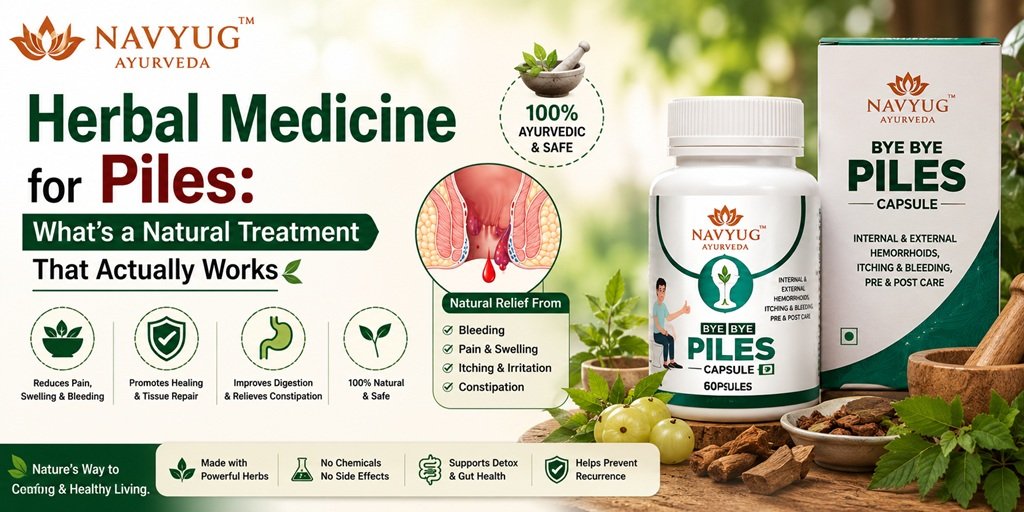
Herbal medicine for piles works best when it targets the actual cause. Triphala and fiber-rich herbs for constipation, Nagkesar for bleeding, Guggul-based formulations for inflammation. It's used consistently over weeks, not as an overnight fix, and a genuine natural treatment for piles includes diet and lifestyle change too. No single herb replaces that.
I looked through a lot of "natural cure for piles" pages while researching this, and one in particular promised "guaranteed piles cure," said it "completely stops bleeding," and claimed "no side effects," all in the same paragraph. That's marketing, not medicine. Let's actually talk about what herbal treatment for piles can realistically do, herb by herb, and where the real evidence sits.
Does Herbal Medicine for Piles Actually Have Any Scientific Backing?
Yes, to a genuine degree. A review of medicinal herbs used for hemorrhoids found that plant compounds like flavonoids and tannins can improve capillary flow, vascular tone, and connective tissue strength, which are exactly the mechanisms involved in piles. That's not folk wisdom dressed up as science. It's a real, if still developing, area of research.
What the same research is honest about: there hasn't been as much rigorous study on herbal hemorrhoid treatments as there has for more mainstream conditions. So "backed by evidence" here means "plausible mechanism with some real support," not "clinically proven" the way a prescription drug would be. Any page telling you otherwise is overselling it.
What's the Best Herbal Medicine for Piles, by What It Actually Treats?
There isn't one best herb. The right one depends on whether your main issue is constipation, bleeding, pain, or inflammation, since different herbs target different parts of the problem.
- For constipation and straining (the root cause for most people): Triphala, a classical three-fruit blend of Amalaki, Bibhitaki, and Haritaki, works as a gentle natural laxative and is widely used specifically because constipation is the underlying driver behind most piles cases. Our Ayurvedic diet for piles guide covers exactly how fiber and hydration work alongside this.
- For bleeding: Nagkesar is the herb most consistently used in classical formulations for this specific symptom, typically taken as an oral remedy. If bleeding is your main concern, our dedicated guide to Ayurvedic medicine for bleeding piles goes into this in more depth.
- For inflammation and pain: Guggul is well known in Ayurveda for anti-inflammatory action and shows up in most classical piles formulations for this reason.
- For general digestive support: Avipattikar Churna is a commonly used herbal formulation addressing both digestion and piles together.
What Does Ayurveda Say Is Actually Causing the Piles in the First Place?
Ayurveda frames piles through dosha imbalance. An aggravated Vata dosha dries out the bowel and causes the straining and constipation behind most cases, while Pitta imbalance is more associated with bleeding and burning, and Kapha imbalance with milder, slower-developing piles. This isn't just theory. It's the reasoning behind why a formulation built for one type of imbalance won't necessarily fix another.
Practically, this means a herbal treatment plan should match your actual symptom pattern, not just be "an Ayurvedic piles product" in general. Someone dealing with dry, hard stools and straining needs a different herbal approach than someone dealing with bleeding or burning.
Is a Natural Treatment for Piles Enough on Its Own, or Do I Need Something More?
For Grade 1 and Grade 2 piles, herbal and dietary treatment alone is often genuinely enough. Home remedy and herbal approaches are specifically documented to work best at these earlier stages, before the pile mass has progressed to needing manual reduction or a procedure. Our guide to piles grades 1 through 4 explains how treatment needs to change as severity increases, which is worth checking if you're not sure where you stand.
That said, natural treatment isn't a substitute for medical attention if certain warning signs show up. See a doctor promptly if you notice continuous or heavy rectal bleeding, severe pain that isn't improving, a lump that's come out and won't go back in, symptoms lasting beyond a week of home care, or blood in your stool along with dizziness or unexplained weight loss. None of these should be managed with herbs alone.
Herbal Options at a Glance
Herb / Formulation | Best For | How It's Typically Used |
Triphala | Constipation, straining (root cause) | 1 tsp powder in warm water, before bed |
Nagkesar | Bleeding | Oral formulation, as directed |
Guggul | Inflammation, pain | Included in classical multi-herb formulations |
Avipattikar Churna | General digestion and piles support | Oral powder, typically with meals |
Fiber-rich diet | Prevention, ongoing management | Daily dietary habit, not a standalone "medicine" |
Step-by-Step: Trying Herbal Treatment for Piles Safely
- Identify your main symptom. Constipation, bleeding, pain, or general discomfort. This determines which herb actually fits.
- Start with the diet and fiber side first, since most herbal treatments work better alongside it, not instead of it.
- Pick a herb matched to your symptom, not just any "Ayurvedic piles" product on the shelf.
- Give it 4 to 6 weeks of consistent use before judging whether it's working. Herbal treatment is gradual by nature.
- Watch for the warning signs above. If any appear, see a doctor rather than continuing home treatment.
- Don't stack multiple herbal products targeting the same symptom at once. More isn't better, and it makes side effects harder to trace.
If you want a formulation already built around the constipation and straining root cause specifically, Bye Bye Piles Capsule, formulated with Nagarmotha, Triphala, Senna, and Nishoth, is designed for exactly that mechanism. If diet and lifestyle changes are more what you're looking for alongside herbs, our broader guide to Ayurvedic treatment for piles covers that side in more detail. And for a full breakdown of how to match Ayurvedic medicine to your specific symptoms, including bleeding and pain, not just constipation, our complete guide to the best Ayurvedic medicine for piles is the place to start.
Frequently Asked Questions
What is the best herbal medicine for piles?
It depends on your main symptom. Triphala works well for constipation-driven piles, Nagkesar for bleeding, and Guggul-based formulations for inflammation and pain. There isn't one single best herb since piles has multiple possible underlying causes.
Is there a natural treatment for piles that works without medicine?
For Grade 1 and Grade 2 piles, dietary changes like fiber and hydration combined with herbal support are often genuinely effective without needing a procedure. More advanced piles usually need more than natural treatment alone.
Does herbal medicine for piles have any scientific backing?
Yes, to a reasonable degree. Research has identified plant compounds like flavonoids and tannins that improve vascular tone and capillary flow, mechanisms directly relevant to piles. The research base is still smaller than for mainstream treatments, so expect modest and gradual results, not dramatic ones.
How long does natural treatment for piles take to work?
Most herbal approaches show initial improvement within 4 to 6 weeks of consistent use, especially when paired with dietary changes. Be skeptical of any product promising fast, guaranteed results.
When should I stop relying on herbal medicine and see a doctor instead?
See a doctor if you have continuous or heavy bleeding, severe unrelieved pain, a lump that won't go back in, symptoms lasting beyond a week, or blood in your stool with dizziness or weight loss. These signs mean natural treatment alone isn't enough.
Can I combine multiple herbal remedies for piles at once?
It's better to start with one, matched to your main symptom, rather than combining several at once. Stacking multiple herbal products makes it harder to know what's actually helping and can increase the chance of side effects.

ABOUT THE AUTHOR
Dr. Iffat Rehman
B.Sc, BAMS (Bachelor of Ayurvedic Medicine & Surgery), Diploma in Dietetics & Nutrition (Ayurveda and Modern Nutrition)