


Blog
Ayurvedic Diet for Piles: What to Eat and What to Avoid

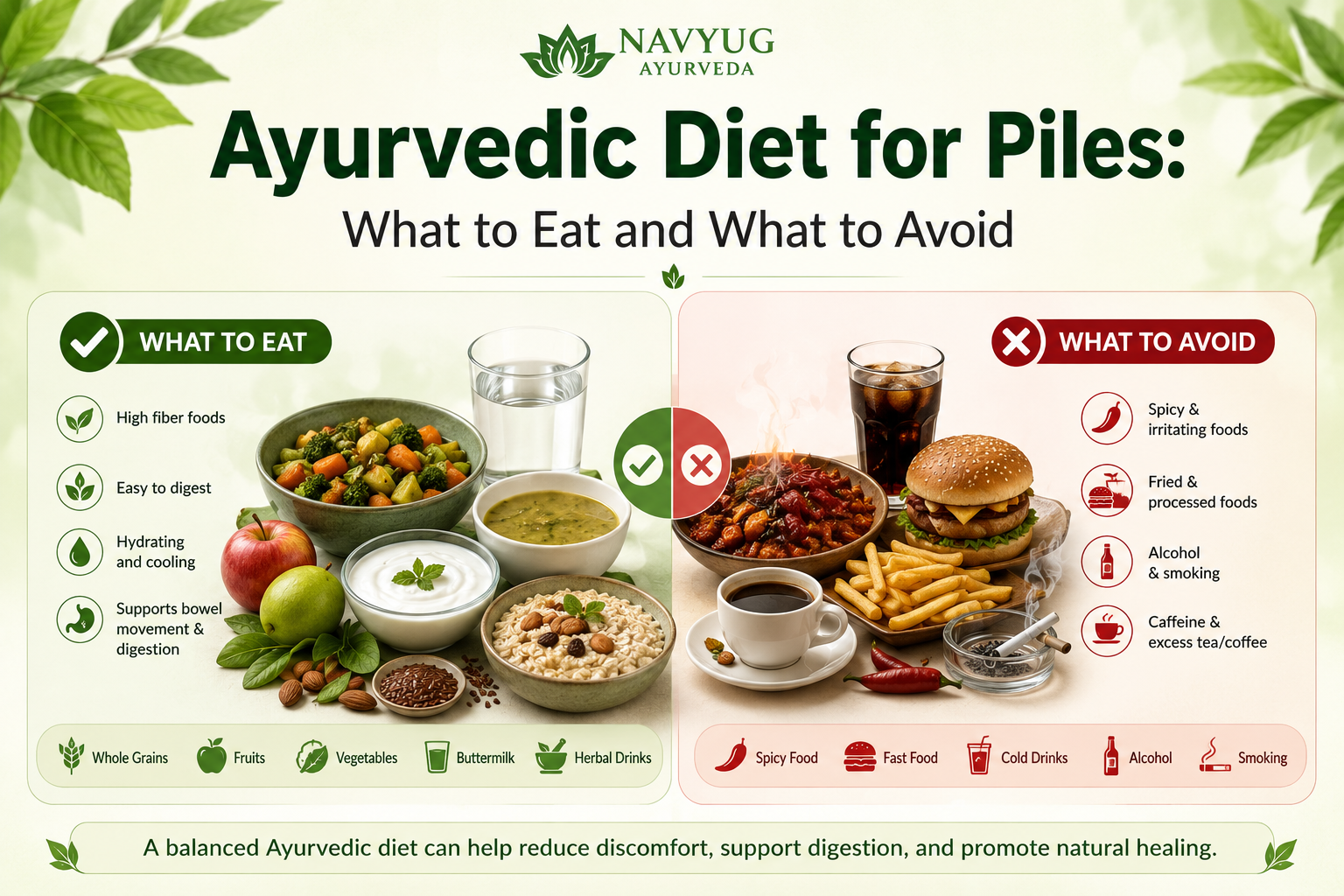
The best Ayurvedic diet for piles centers on high-fiber foods, warm cooked meals, and adequate hydration to soften stools and reduce straining, while limiting fried, processed, and excessively spicy foods that can aggravate an active flare-up. Aim for 25-30 grams of fiber daily alongside 8-10 glasses of water, since fiber without enough water can actually worsen constipation.
I get asked this constantly in consultations, and I get why — there’s a lot of conflicting advice out there. One person tells you dairy is the enemy, another says avoid red meat entirely, someone else swears by cutting all spice. Let’s separate what Ayurveda actually says from what’s just gotten repeated so often it sounds true.
What Does an Ayurvedic Diet for Piles Actually Look Like?
It’s built around balancing Vata dosha, since an aggravated Vata is what dries out the bowel and causes the hard, straining stools that lead to piles in the first place. In Ayurveda, piles (Arsha) is understood as a condition where imbalanced digestion, not just diet in isolation, is doing the damage over time.
Practically, that means warm, well-cooked, easily digestible meals rather than raw, cold, or overly processed food — Ayurveda treats food as something that either supports digestion or fights it, and with piles, there’s very little room for food that fights it.
What Should I Eat If I Have Piles?
Prioritize fiber-rich, warm, and moisture-retaining foods — think broken wheat porridge, vegetable upma, oats, whole fruits, and dals, alongside plenty of water. Fiber creates bulk in the stool, which directly reduces the straining that aggravates piles.
A simple day might look like this: warm water with soaked flaxseed or aloe vera juice first thing in the morning, a breakfast of vegetable idli or oats, a lunch of chapati with dal, brown rice, and a fiber-rich vegetable, and an early, light dinner. Soaked dry figs (eaten overnight-soaked, along with the water they soaked in) and radish leaf juice are both traditional additions worth knowing about — they’re not magic, but they genuinely support the same fiber-and-hydration mechanism everything else here relies on.
What Foods Should Be Avoided in Piles?
Fried and oily food, heavily processed snacks, refined sugar, and pickles are the main things to cut back on, since they tend to slow digestion and can worsen constipation. White rice and refined grains are worth limiting too — not because they’re “bad,” but because they’re low in the fiber that’s doing the actual work here.
Here’s something worth flagging honestly: I don’t believe skipping meals helps either, especially breakfast. A lot of people trying to “be careful” with their diet end up skipping meals, which actually disrupts bowel regularity further.
Is Spicy Food Actually Bad for Piles?
Not as directly as most advice suggests — spicy food doesn’t cause piles, and in most people it doesn’t even worsen the underlying condition. Where it becomes a real problem is during an active flare-up: if you already have swollen, irritated hemorrhoids, spicy food can make bowel movements more uncomfortable simply through general digestive irritation, not because it’s doing anything to the piles themselves.
So my honest advice: if you’re not currently flaring up, you don’t need to eliminate spice from your life out of fear. If you are in an active, painful episode, dialing it back temporarily makes sense, purely for comfort, not because it’s “causing” anything.
Can Diet Alone Cure Piles Without Medicine?
For early-stage piles, yes, diet changes alone can meaningfully improve or resolve symptoms, especially when the root cause is constipation and straining. For more advanced or recurring piles, diet is necessary but usually not sufficient on its own — it works best alongside proper Ayurvedic treatment, and this is exactly where choosing the right Ayurvedic medicine for piles alongside your diet makes the real difference.
I’d rather be honest about this than let you believe diet is a guaranteed fix regardless of severity. It’s foundational, not a substitute for treatment when treatment is actually needed — and if you’re unsure whether your case needs more than dietary change, it’s worth understanding whether a permanent resolution is realistic for your specific situation before assuming diet alone will do it.
Foods to Eat vs. Foods to Limit — Quick Reference
Eat More Of | Limit or Avoid |
Whole fruits (papaya, jambul, Amalaki) | Fried and oily food |
Oats, broken wheat porridge, whole grains | Refined sugar, packaged sweets |
Dals, sprouts, lentils | Heavily processed and packaged snacks |
Leafy greens and fiber-rich vegetables | White rice and refined grains |
Warm water, herbal tea, coconut water | Excess caffeine and carbonated drinks |
Ghee in moderation (helps lubricate digestion) | Pickles and excess salt
|
Step-by-Step: Building Your Daily Piles-Friendly Routine
- Start the day with warm water plus soaked flaxseed or aloe vera juice, before anything else.
- Aim for 25-30 grams of fiber daily, spread across meals rather than one large serving.
- Drink 8-10 glasses of water — fiber without enough water can actually make constipation worse, not better.
- Eat warm, freshly cooked meals rather than cold, raw, or heavily processed food.
- Don’t skip meals, especially breakfast — irregular eating disrupts bowel regularity.
- Eat slowly and sit down for meals — Ayurveda treats how you eat as part of digestion, not just what you eat.
- Pair this routine with a formulation built for digestive support, like Bye Bye Piles Capsule, which targets the same bowel-regularity mechanism this diet is built around.
Diet alone won’t shrink an existing pile mass pairing it with the right formulations is what speeds things up, so see our guide to the best ayurvedic medicine for piles for what to take alongside these dietary changes.
Frequently Asked Questions
What should I eat if I have piles?
Focus on high-fiber, warm, easily digestible foods like oats, whole fruits, dals, and leafy vegetables, alongside plenty of water. This combination softens stool and reduces the straining that aggravates piles.
Is spicy food bad for piles?
Spicy food doesn’t cause piles and generally doesn’t worsen the underlying condition, but it can make bowel movements more uncomfortable during an active flare-up due to general digestive irritation. If you’re not currently flaring, there’s no strong reason to eliminate spice entirely.
What foods should be avoided in piles?
Fried and oily food, heavily processed snacks, refined sugar, and pickles are the main foods worth limiting, since they tend to slow digestion and worsen constipation. White rice and other refined grains are worth reducing too, in favor of higher-fiber alternatives.
Can diet alone cure piles without medicine?
For early-stage piles, especially those driven by constipation, diet changes alone can meaningfully help or resolve symptoms. For advanced or recurring piles, diet is necessary but usually needs to be paired with proper Ayurvedic treatment.
How much fiber should I eat daily if I have piles?
Aim for around 25-30 grams of fiber daily, spread across meals, alongside adequate water intake. Fiber without enough water can actually worsen constipation rather than help it.
Can I eat dairy if I have piles?
Dairy itself doesn’t directly cause constipation, but it can contribute to discomfort during a flare-up for some people. Fermented options like lassi are often better tolerated than plain milk if you notice dairy affects you.

ABOUT THE AUTHOR
Dr. Iffat Rehman
B.Sc, BAMS (Bachelor of Ayurvedic Medicine & Surgery), Diploma in Dietetics & Nutrition (Ayurveda and Modern Nutrition)