


Blog
Ayurvedic Medicine vs. Weight Loss Supplements: Which Is Better?

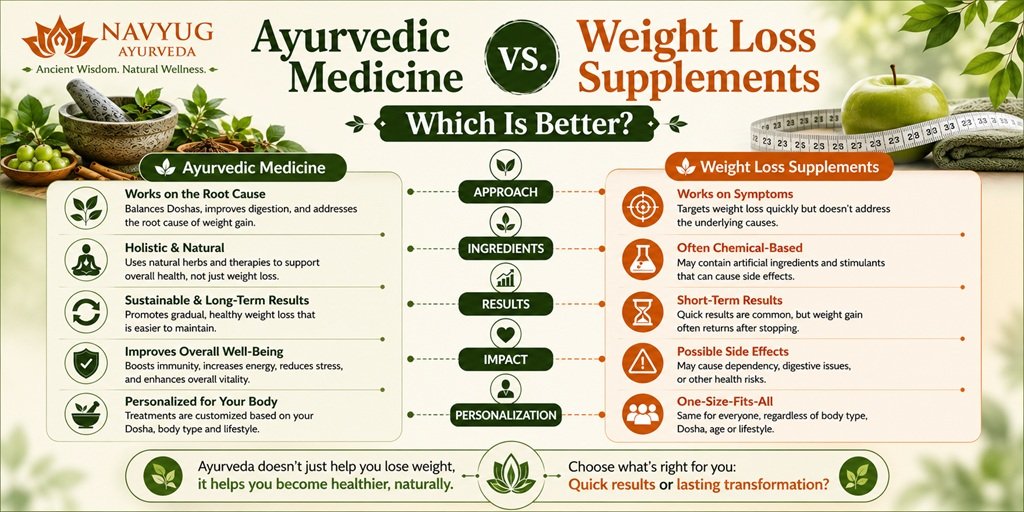
Ayurvedic medicine and generic weight loss supplements both fall under the broader supplement category, but Ayurvedic medicine sold in India follows AYUSH-specific manufacturing and licensing standards, while many generic supplements, especially imported ones marketed as general fat burners, don’t carry that same category-specific oversight. Neither category is “clinically proven” in the way a regulated pharmaceutical drug is, so the honest comparison is about mechanism and regulation, not one being magically evidence-based and the other not.
I want to be straightforward here, since a lot of content on this comparison leans into vague superiority claims on one side or the other. Let’s actually look at what’s different.
What’s the Actual Difference Between Ayurvedic Medicine and Generic Weight Loss Supplements?
The core difference is mechanism and regulatory framework, not one category being medicine and the other being unregulated junk. Ayurvedic formulations generally work through digestion, appetite, and metabolism support using classical herb combinations, while generic weight loss supplements more often lean on stimulants like caffeine, or mechanisms like lipase inhibition to block fat absorption. In India specifically, genuine Ayurvedic medicine manufactured under AYUSH licensing follows defined formulation and quality standards, a framework generic “weight loss supplement” branding, particularly on imported or unregulated products, frequently doesn’t have to meet.
Which Has More Evidence Behind It?
Honestly, evidence is limited and inconsistent across both categories, this isn’t a case where one side is clinically proven and the other is folklore. Regulatory bodies caution that dietary supplements broadly, Ayurvedic or otherwise, aren’t tested and regulated the same way pharmaceutical drugs are, which means it can be genuinely difficult to know exactly what’s in a given product regardless of which category it’s marketed under. The meaningful difference isn’t evidence quality, it’s that AYUSH licensing gives Indian consumers a specific, checkable regulatory framework for Ayurvedic products that a lot of generic supplement marketing simply doesn’t offer.
Is Ayurvedic Weight Loss Better Than Weight Loss Supplements?
It depends on what you’re optimizing for, gentler, sustained support with a checkable regulatory framework, or a stimulant-driven, faster-acting effect with less oversight. Ayurvedic formulations tend to have a milder side effect profile since they aren’t typically stimulant-based, while generic supplements can produce faster, more noticeable effects, often at the cost of jitteriness, crashes, or the kind of ingredient opacity that makes it hard to know what you’re actually taking.
Category | Typical Mechanism | Regulatory Framework (India) | Typical Side Effect Profile |
Ayurvedic medicine (AYUSH-licensed) | Digestion, appetite, and metabolism support via herbs | AYUSH manufacturing license and quality standards | Generally milder, mild digestive adjustment most common |
Generic weight loss supplements | Often stimulant-based (caffeine) or fat-blocking (lipase inhibitors) | Varies widely, especially for imported or unregulated products | Can include jitteriness, heart rate spikes, or crashes |
What About Keto Pills or Stimulant Fat Burners Specifically?
Keto pills are their own specific category worth a separate look, they work by supplying exogenous ketones rather than through digestion support or stimulation, and currently there’s no strong evidence they cause weight loss on their own. We’ve covered that comparison in full detail in our Ayurvedic weight loss medicine vs. keto pills breakdown, worth reading if that’s the specific comparison you’re after rather than the broader supplement category.
So Which Should You Actually Choose?
For most people prioritizing gentler, sustained support with an actual regulatory framework behind it in India, Ayurvedic medicine is the more defensible choice. If your priority is a faster, more noticeable short-term effect and you’re comfortable with less ingredient transparency and a harsher side effect profile, that’s what generic stimulant-based supplements are generally offering, just be clear-eyed that “generic supplement” and “well-studied” aren’t the same thing either.
If you’re leaning toward the Ayurvedic route, our full guide to ayurvedic medicine for weight loss breaks down specific formulations and the evidence behind individual herbs.
Frequently Asked Questions
Is Ayurvedic weight loss better than weight loss supplements?
It depends on what you’re prioritizing, Ayurvedic medicine generally offers gentler, digestion-based support with AYUSH regulatory oversight in India, while generic supplements often work through stimulants with less category-specific regulation. Neither is definitively “better” in a clinical sense, since evidence is limited across both.
Ayurvedic medicine vs supplements for weight loss, which is better?
Ayurvedic medicine tends to have a milder side effect profile and a checkable regulatory framework in India through AYUSH licensing, while generic supplements can act faster but often with less ingredient transparency. The right choice depends on your priorities around gentleness versus speed.
Is Ayurvedic medicine regulated the same way as pharmaceutical drugs?
No, Ayurvedic medicine falls under the AYUSH regulatory framework in India, which is a specific licensing and quality standard, but it isn’t held to the same clinical trial requirements as pharmaceutical drugs. This is true of most weight loss supplements generally, not a weakness unique to Ayurveda.
Are generic weight loss supplements safe?
Safety varies significantly, especially for imported or unregulated products where ingredient transparency can be limited. Stimulant-based supplements specifically carry a higher risk of side effects like jitteriness or heart rate spikes compared to digestion-focused Ayurvedic formulations.
Can I combine Ayurvedic medicine with other weight loss supplements?
This isn’t advisable without medical guidance, combining stimulant-based supplements with herbal formulations can compound side effects or interact in ways that aren’t well studied. If you’re considering combining categories, that’s worth discussing with a doctor first.