


Blog
Ayurvedic Treatment for Long-Term Weight Management: Preventing Weight Regain

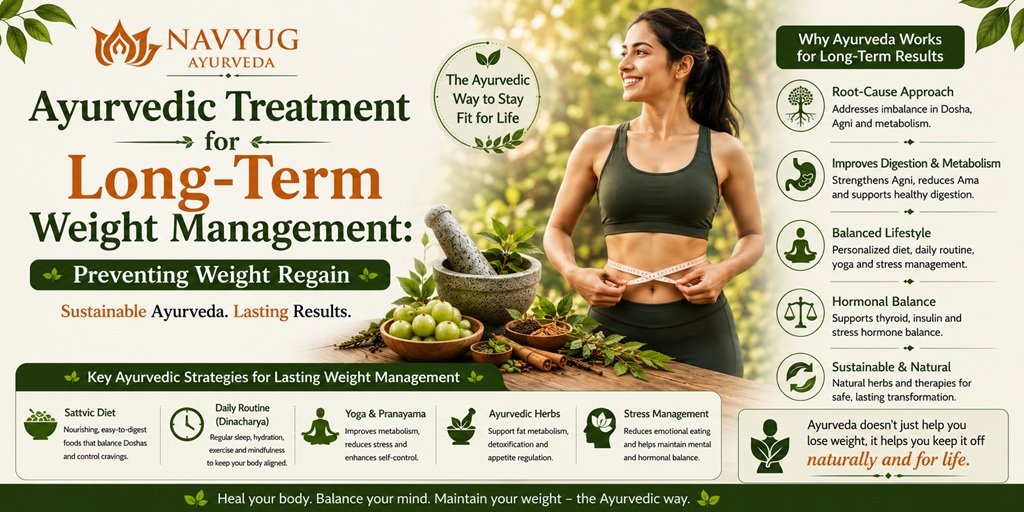
The best Ayurvedic treatment for long-term weight management shifts focus from active fat reduction to sustaining Agni (digestive fire) and consistent daily routine, Dinacharya, once you’ve reached a healthier weight, rather than continuing the same intensive protocol indefinitely. Weight regain happens less because metabolism “breaks” and more because the habits that got results quietly slip once the goal feels achieved.
This is the question I wish came up more in consultation, most people ask me how to lose weight, almost nobody asks how to keep it off, and that second question is honestly the harder one to answer well.
Why Do People Regain Weight After Losing It?
Most people assume it’s a slowed metabolism, but research on this is actually more nuanced than that popular explanation suggests. A well designed follow-up study tracking women after weight loss found that metabolic adaptation at the level of resting metabolic rate was minimal by one and two years out, and didn’t actually predict who regained weight and who didn’t.¹ What does drive regain more consistently is a mix of appetite and hunger signaling rebounding after weight loss, and simply, the habits that created the loss not being sustained once the initial motivation fades.
That’s actually a more hopeful picture than “your metabolism is permanently damaged,” it means regain is more about behavior and routine than a broken body, which lines up closely with how Ayurveda has approached this for a long time.
What Is the Ayurvedic Approach to Preventing Weight Regain?
Ayurveda treats weight maintenance as an ongoing relationship with Agni and daily routine, not a phase that ends once you hit a number. The active weight loss phase, correcting Kapha imbalance, kindling a sluggish Agni, tends to be more intensive, while the maintenance phase shifts toward sustaining that balance through Dinacharya rather than continuing the same aggressive protocol indefinitely.
How Is Maintenance Different From the Initial Weight Loss Phase?
Aspect | Active Weight Loss Phase | Maintenance Phase |
Herbal intensity | More concentrated, Kapha-reducing formulations | Lighter, balancing formulations, often with planned breaks |
Diet approach | Stricter Kapha-pacifying diet | More flexible, tridoshic balance |
Primary focus | Correcting the imbalance | Sustaining Agni and routine |
Monitoring | Regular reassessment as weight shifts | Periodic check-ins, less frequent adjustment |
Continuing the intensive loss-phase protocol indefinitely isn’t actually the goal, and can create its own imbalance over time. The shift toward a lighter, sustaining approach is a deliberate part of the process, not a sign you’ve stopped trying.
What Daily Habits Actually Prevent Weight Regain?
- Consistent meal timing, irregular eating is one of the fastest ways to weaken Agni again after it’s been restored
- Avoiding daytime sleep, a classical Kapha-aggravating habit that’s easy to slip back into once weight loss pressure eases
- Warm water through the day, rather than cold, supports digestion staying steady rather than sluggish
- Mindful, unhurried eating, eating quickly or while distracted is consistently linked to overeating in both Ayurvedic and modern frameworks
- Regular movement, not necessarily intense, but consistent, since inactivity is a Kapha aggravator that compounds over time
Should You Keep Taking Herbal Formulations Long-Term, or Stop Once You Hit Your Goal?
Neither extreme is ideal, stopping abruptly removes the digestive support that helped you get there, while continuing the exact same intensive formulation indefinitely isn’t necessary and, with some herbs, isn’t advisable. Formulations like Triphala are generally better cycled with periodic breaks during long-term use rather than taken continuously for months without pause, this is worth discussing with a practitioner as you transition from active loss to maintenance, since the right approach shifts specifically at this stage.
If you’re still in the active loss phase and haven’t reached this point yet, our guide to ayurvedic medicine for weight loss covers formulation choices for that stage in depth.
Frequently Asked Questions
What is the best Ayurvedic treatment for long-term weight management?
The best approach shifts from intensive Kapha-reducing formulations used during active weight loss to sustaining Agni and consistent Dinacharya (daily routine) once a healthier weight is reached. Weight regain is driven more by slipping habits and appetite rebound than a permanently changed metabolism, which is why routine matters as much as any formulation.
Why do people regain weight after losing it with Ayurveda or any other method?
Research suggests metabolic adaptation plays a smaller role than commonly assumed, appetite and hunger signaling rebounding after weight loss, combined with habits not being sustained, are more consistent drivers of regain. This is true across weight loss methods, not something specific to Ayurvedic approaches.
Do I need to keep taking Ayurvedic herbs forever to maintain weight loss?
Not necessarily the same intensive formulation, but complete discontinuation also isn’t ideal since it removes digestive support that helped achieve the loss. A lighter, often cycled approach during maintenance is generally more appropriate than either extreme.
What daily habits help prevent weight regain in Ayurveda?
Consistent meal timing, avoiding daytime sleep, warm water through the day, mindful eating, and regular movement are the core Dinacharya habits linked to sustained Agni and weight maintenance. These matter more for long-term success than any single herb or formulation.
Is weight regain inevitable after Ayurvedic weight loss treatment?
No, but it becomes more likely when the maintenance phase is treated as optional rather than a distinct, ongoing part of the process. Shifting focus from active loss to sustained routine and lighter formulation support is what actually reduces regain risk.
Where to Go From Here
Maintenance isn’t a passive phase, it’s an active, ongoing relationship with your own Agni and daily routine, just a lighter one than active weight loss required. If abdominal fat specifically was your original concern and you’re now focused on keeping it off, our belly fat guide covers the mechanism in more depth, useful context even at the maintenance stage.