


Blog
Ayurvedic Weight Loss Medicine for Men: What’s Different

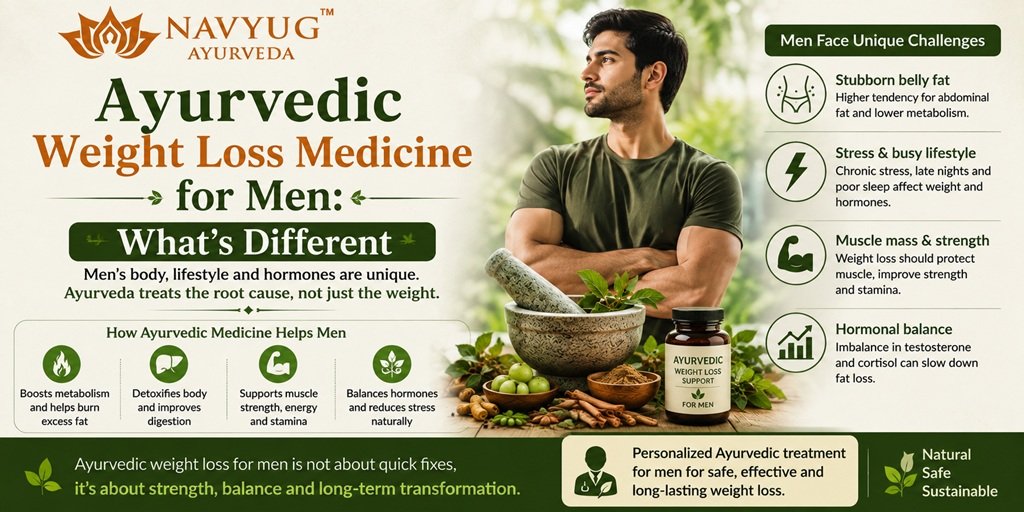
Ayurvedic medicine for men trying to lose weight generally follows the same dosha framework as women, but two things genuinely differ: men typically carry more muscle mass and store excess fat predominantly around the abdomen, driven partly by testosterone, which changes both the health stakes and which formulations make sense. Most weight loss herbs work the same way regardless of gender, the difference is more about pattern and priority than a separate category of medicine.
I get asked fairly often whether men need a “different” product entirely, and the honest answer is more nuanced than yes or no, so let’s go through what actually changes.
Does Ayurvedic Medicine Actually Work Differently for Men?
Not fundamentally, the same herbs, Guggul, Triphala, Trikatu, work through the same digestion and metabolism mechanisms regardless of gender. What differs is emphasis: men are more likely to present with abdominal fat specifically as the primary concern, which shifts the practical focus even when the underlying formulation logic stays the same.
What Makes Male Physiology Different When It Comes to Weight?
Men generally carry more baseline muscle mass than women, largely due to testosterone, which also means a somewhat higher resting metabolic rate. But that same hormonal picture cuts both ways, testosterone plays a documented role in fat distribution, and clinical research on hypogonadal men has shown that restoring healthy testosterone levels is associated with measurable reductions in body weight and waist circumference over time.¹ That’s a modern-medicine data point, not an Ayurvedic one, but it reinforces something Ayurveda has approached from its own angle for a long time, hormonal balance and fat storage are genuinely linked in men, not just a coincidence of aging.
Why Do Men Tend to Gain Weight Around the Belly Specifically?
This comes down to fat distribution patterns tied to male hormone profiles, men more commonly store excess fat viscerally, around the abdomen, rather than distributed across hips and thighs the way it’s more common in women. That’s not just a cosmetic difference, visceral fat carries higher cardiovascular risk than fat stored elsewhere, which is part of why abdominal fat specifically deserves more attention in men rather than being treated as purely aesthetic.
If abdominal fat is genuinely your main concern rather than overall weight, our belly fat guide goes into that mechanism in more depth, including why no formulation can target it in isolation from overall fat metabolism.
Which Ayurvedic Herbs Are Commonly Used for Men’s Weight Management?
The core herbs don’t change, Guggul for fat metabolism, Triphala for digestion, and Trikatu for kindling a sluggish Agni all apply regardless of gender. What sometimes shifts is formulation emphasis, given the abdominal fat pattern common in men, formulations weighted toward metabolic and digestive stimulation, rather than the gentler, more balancing approach sometimes preferred for hormonally sensitive weight gain in women, tend to fit more often.
Consideration | Typical Emphasis for Men | Why |
Fat distribution | Abdominal, visceral | Testosterone-linked distribution pattern |
Metabolic baseline | Generally higher (more muscle mass) | Can respond faster to digestion-focused herbs |
Hormonal complexity | Comparatively simpler (no cyclical hormonal shifts) | Fewer variables to account for in formulation timing |
Cardiovascular consideration | Higher priority given visceral fat risk | Worth flagging to a doctor alongside any weight loss plan |
Is There Anything Men Should Be Extra Careful About?
Age matters more than most people expect, testosterone naturally declines with age, and that decline is itself associated with increased fat accumulation and reduced muscle mass. This doesn’t mean herbal support won’t help, it means expectations and timelines may need adjusting for men managing weight later in life, rather than assuming the same protocol works identically at 30 and at 55.
Frequently Asked Questions
What Ayurvedic medicine is suitable for men trying to lose weight?
The same core herbs used broadly, Guggul, Triphala, and Trikatu, work for men through the same digestion and metabolism mechanisms, with formulations often emphasizing metabolic stimulation given the common pattern of abdominal fat storage in men. There’s no separate category of “men’s Ayurvedic medicine,” the difference is in emphasis rather than entirely different herbs.
Why do men gain weight around the belly more than elsewhere?
This is linked to testosterone’s role in fat distribution, which tends to direct excess fat storage toward the abdomen (visceral fat) rather than hips and thighs. Visceral fat also carries higher cardiovascular risk, which is part of why this pattern deserves attention beyond appearance alone.
Do men lose weight faster than women with Ayurvedic medicine?
Not necessarily faster, but men’s generally higher baseline muscle mass can mean a somewhat higher resting metabolic rate, which may support a faster response to digestion-focused herbs. Individual results still depend heavily on consistency, diet, and the specific imbalance driving the weight gain.
Does age affect which Ayurvedic medicine works for men?
Yes, declining testosterone with age is associated with increased fat accumulation and reduced muscle mass, which can affect how quickly a formulation shows results. This doesn’t mean herbal support stops working with age, it means timelines and expectations may need adjusting.
Can men and women use the same Ayurvedic weight loss formulation?
In many cases yes, since the core mechanism (digestion and metabolism support) is the same, but women managing hormonally driven weight gain, like PCOS-related cases, may need a different formulation emphasis than the abdominal-fat-focused approach common for men.
Where to Start
If overall weight, not just abdominal fat, is the goal, our complete guide to ayurvedic medicine for weight loss covers the core formulations and evidence in depth, most of which applies the same way regardless of gender. The real starting point either way is figuring out what’s actually driving the weight gain before picking a product based on who it’s marketed to.