


Blog
How Hormones Change the Weight Loss Approach for Women

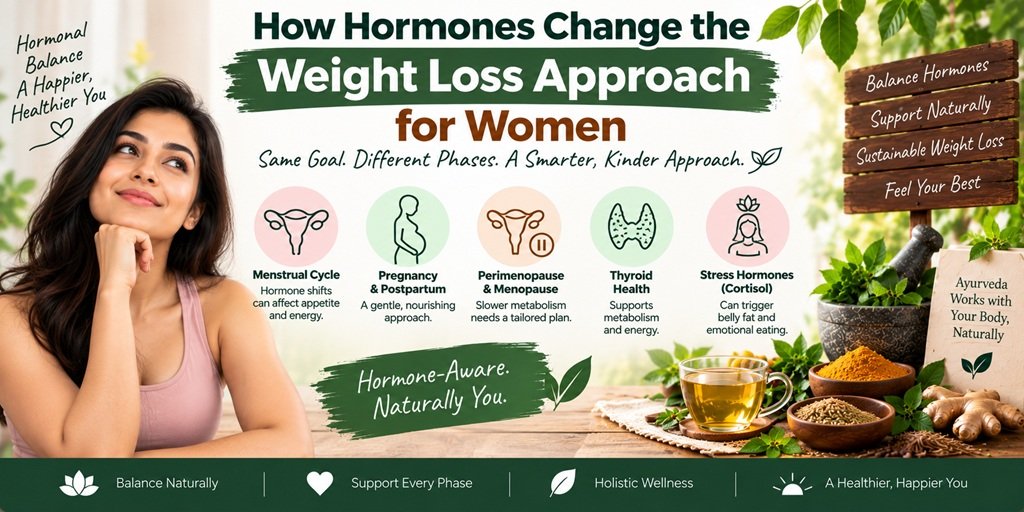
Hormones change the weight loss approach for women because conditions like PCOS, thyroid imbalance, and menopause don’t just add extra weight, they change how the body processes food and stores fat at a mechanical level. That’s why general “eat less, move more” advice often falls flat for these situations, the problem usually isn’t willpower, it’s the underlying biology working against the standard approach.
We’ve covered which herbs suit which hormonal condition in detail elsewhere. This piece is about the part that usually gets skipped, why these conditions actually change the mechanics of weight loss, not just the difficulty level.
Why Does PCOS Make Weight Loss Feel So Much Harder?
Because insulin resistance, present in a majority of PCOS cases, creates a genuine biochemical loop that works against weight loss, not just a motivation problem. When cells stop responding normally to insulin, the body compensates by producing more of it, and elevated insulin does two things simultaneously: it promotes fat storage and actively inhibits lipolysis, the process of breaking down stored fat for energy. On top of that, the excess insulin raises androgen levels, which can worsen the underlying PCOS itself, creating a cycle rather than a single obstacle.
This has a real practical implication most general weight-loss content misses: a PCOS-specific approach benefits from managing blood sugar and meal timing, not just calorie count, since insulin sensitivity actually varies through the day, some women find eating more of their carbohydrates earlier when sensitivity is higher genuinely easier to manage than eating them in the evening.
Why Does Thyroid Imbalance Change the Math So Directly?
Because thyroid hormones directly set your resting metabolic rate, they’re not a side factor, they’re the mechanism itself. An underactive thyroid means your body is burning fewer calories at rest than it should be, independent of diet or activity, so the same eating pattern that maintains weight for someone with normal thyroid function can lead to gradual weight gain for someone whose thyroid output is low. This is why thyroid levels need to be medically confirmed and managed first, no amount of dietary discipline compensates for a metabolic rate that’s mechanically running slow.
Why Does Menopause Shift Fat to the Abdomen Specifically?
Because declining estrogen during perimenopause and menopause changes where fat gets stored, shifting the pattern toward the abdomen in a way that resembles the fat distribution more typically seen in men, independent of whether total weight changes at all. This is worth knowing specifically because it means the scale can stay the same while body composition and waist measurement shift meaningfully, someone might not be “gaining weight” in the traditional sense while still experiencing a real change in how and where fat is stored.
How Does This Actually Change the Approach?
Hormonal Driver | What’s Happening Mechanically | What Changes in the Approach |
PCOS (insulin resistance) | Elevated insulin promotes fat storage, blocks fat breakdown, raises androgens | Blood sugar and meal timing management, not just calorie reduction |
Thyroid imbalance | Resting metabolic rate is directly lowered | Medical thyroid management first, dietary changes alone won’t compensate |
Menopause (estrogen decline) | Fat distribution shifts toward the abdomen regardless of total weight | Track waist measurement, not just the scale |
Postpartum | Body is recovering, hormone levels normalizing gradually | Gentle, gradual approach, medical clearance especially if breastfeeding |
Does This Mean the Herbs Are Different Too?
Not entirely, but which herb makes sense depends heavily on which mechanism above is actually driving things, which is exactly why identifying the hormonal picture matters more than picking a product first. For the specific herb-by-condition breakdown, including PCOS, thyroid, and menopause specifically, our guide for women’s weight management covers that ground in full.
Frequently Asked Questions
Why is it harder for women with PCOS to lose weight?
Insulin resistance, common in PCOS, creates a cycle where elevated insulin promotes fat storage, blocks fat breakdown, and raises androgen levels that can worsen the condition further. This is a biochemical mechanism, not a willpower issue, which is why blood sugar management often matters more than calorie counting alone.
Does thyroid imbalance really affect weight loss that much?
Yes, thyroid hormones directly regulate resting metabolic rate, so an underactive thyroid means fewer calories burned at rest regardless of diet or activity. This is why thyroid levels need medical confirmation and management before assuming a dietary approach alone will work.
Why does menopause cause belly fat even without weight gain?
Declining estrogen during menopause shifts fat storage toward the abdomen specifically, independent of whether total body weight changes. This is why waist measurement can be a more meaningful indicator than the scale during this life stage.
Do hormonal factors mean I need completely different herbs than general weight loss formulations?
It depends on which hormonal driver is actually present, PCOS, thyroid, or menopause each point toward different herb choices, which is covered in detail in our dedicated guide for women. Identifying the actual driver matters more than starting with a product.
Can I address hormone-driven weight gain through diet alone?
Diet plays a real role, especially for PCOS-related insulin resistance, but thyroid conditions specifically need medical management that diet alone can’t replace. Ayurvedic support can complement medical treatment but shouldn’t substitute for it.
How do I know if my weight gain is hormonally driven?
Signs like irregular periods, excess hair growth, fatigue, or a family history of thyroid conditions are worth discussing with a doctor before assuming general weight gain causes. Getting the underlying driver properly diagnosed changes which approach actually makes sense.
Where to Go From Here
Understanding the mechanism is the useful first step, applying it to the right formulation and approach is the next one. Our guide for women’s weight management walks through the specific herbs and decision process for PCOS, thyroid, menopause, and postpartum situations in depth.
Medical Disclaimer
This content is intended for educational purposes only and should not be considered medical advice. PCOS, thyroid conditions, and menopause-related changes should be evaluated and managed by a qualified healthcare professional. Always consult a doctor before starting any treatment or supplement, especially alongside existing hormonal medication.