


Blog
Fat Loss vs. Weight Loss: Does Ayurveda Treat Them Differently?

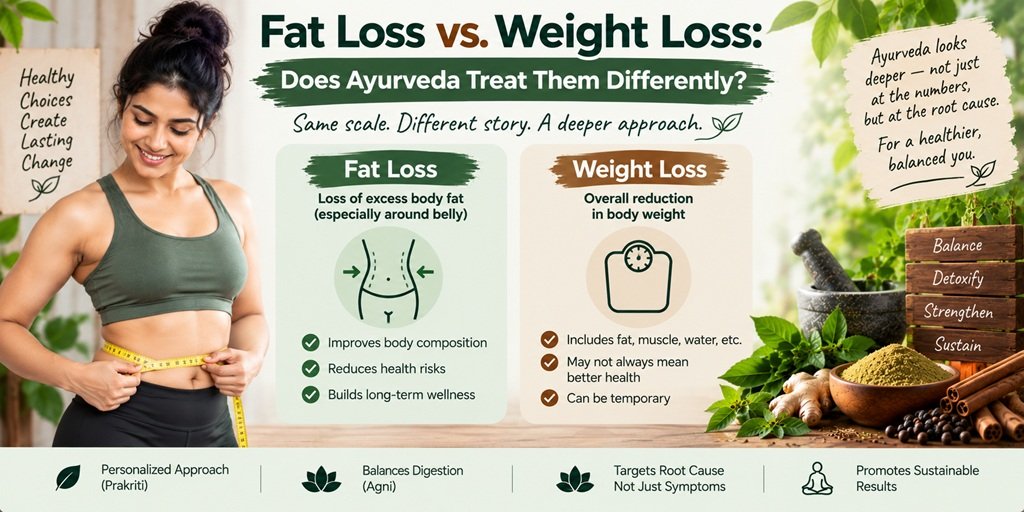
Weight loss and fat loss aren’t quite the same thing, weight loss is any drop in total body mass, water, muscle, or fat, while fat loss specifically means reducing fat tissue while preserving muscle. Ayurveda doesn’t use this exact modern vocabulary, but its traditional focus on Meda Dhatu, fat tissue specifically, actually lines up more closely with what “fat loss” means today than the broader idea of “weight loss” does.
That’s a more interesting answer than “they’re the same thing,” so let’s actually walk through why.
What’s the Actual Difference Between Weight Loss and Fat Loss?
Weight loss is whatever the scale shows dropping, which could be water, glycogen, muscle, or fat in any combination, while fat loss refers specifically to a reduction in adipose tissue, ideally while muscle stays intact. This distinction matters more than it sounds. Research on caloric restriction consistently finds that a meaningful share of weight lost this way, commonly cited around a quarter of total weight lost, comes from fat-free mass rather than fat itself, particularly with rapid or aggressive dieting.¹ Two people can lose the same number on the scale and end up in very different places, one losing mostly fat, the other losing a concerning amount of muscle along with it.
Does Ayurveda Actually Draw This Same Distinction?
Not in the same vocabulary, but the underlying target is closer to fat loss than general weight loss. Ayurveda’s traditional framework for obesity (Sthaulya) centers specifically on Meda Dhatu, the fat tissue itself, and correcting the Agni and Kapha imbalance believed to drive its excess accumulation, rather than tracking a number on a scale. In that sense, Ayurveda was arguably making something close to the fat-versus-weight distinction long before body composition scanning existed, it just never used that specific modern language.
Why Does This Matter for Choosing an Approach?
Because the mechanism behind a treatment affects which kind of “loss” you actually get, not just how much. Aggressive calorie restriction, the classic crash-diet approach, is exactly the scenario where that meaningful chunk of fat-free mass loss shows up most, since the body pulls from muscle tissue when energy intake drops too sharply. Ayurvedic treatment works through a fundamentally different mechanism, correcting digestion and metabolism gradually rather than forcing a steep calorie deficit, which structurally doesn’t create the same acute pressure that drives muscle loss in rapid dieting.
That’s not a guarantee every Ayurvedic formulation preserves muscle perfectly, that depends on diet and activity too, but the underlying mechanism is genuinely different from the aggressive-restriction pattern that research consistently links to lean tissue loss.
How Does This Actually Compare?
General Weight Loss (Aggressive Restriction) | Ayurvedic Approach (Digestion-Based) | |
Primary mechanism | Steep calorie deficit | Agni and Kapha correction, gradual metabolic change |
Typical composition of loss | Includes a meaningful share of fat-free mass, especially early on | Structurally less prone to rapid muscle loss, though diet and activity still matter |
Speed | Often fast initially, frequently unsustainable | Deliberately gradual, 4 to 8 weeks for visible change |
What’s actually targeted | The number on the scale | Meda Dhatu specifically, fat tissue and the digestive imbalance behind it |
So Is There a Different Ayurvedic Medicine for “Fat Loss” Specifically?
No, and we’ve covered this directly elsewhere, the herbs and formulations used for fat loss and general weight loss in Ayurveda work through the same digestion and metabolism mechanism, so the distinction doesn’t create a separate product category.
Frequently Asked Questions
Is fat loss the same as weight loss?
No, weight loss is any reduction in total body mass, including water, muscle, and fat, while fat loss specifically means reducing fat tissue while preserving muscle. Rapid weight loss commonly includes a meaningful share of muscle loss, which fat loss specifically aims to avoid.
Does Ayurveda treat fat loss and weight loss differently?
Not through separate formulations, but Ayurveda’s traditional target, Meda Dhatu (fat tissue), is actually closer to the modern concept of fat loss than general weight loss. The herbs and mechanism used are the same regardless of which term someone searches.
Why does rapid weight loss often include muscle loss?
Aggressive calorie restriction creates a steep energy deficit that the body partly meets by breaking down muscle tissue, not just fat. Research on caloric restriction commonly finds around a quarter of total weight lost this way comes from fat-free mass rather than fat.
Does Ayurvedic treatment protect muscle better than crash dieting?
Its gradual, digestion-based mechanism doesn’t create the same acute pressure that drives rapid muscle loss in aggressive dieting, but diet and activity levels still affect the outcome. It’s a structurally different approach, not an automatic guarantee.
Should I search for ayurvedic medicine for fat loss or weight loss?
Either term will lead you to the same formulations, since Ayurveda addresses both through the same digestion and metabolism mechanism. The word choice mostly reflects whether you’re thinking about it from a fitness angle or a general health one.
How long does it take to see fat loss specifically with Ayurvedic treatment?
Most people see visible change within 4 to 8 weeks of consistent use alongside diet and lifestyle correction, since the mechanism works gradually rather than forcing rapid loss. This timeline applies whether someone frames their goal as fat loss or general weight loss.
Where to Go From Here
Understanding the distinction is useful, but the practical next step is the same regardless of which term describes your goal. This detailed guide covers the specific herbs, evidence, and formulation choices in depth.
Medical Disclaimer
This content is intended for educational purposes only and should not be considered medical advice. Always consult a qualified healthcare professional before starting any weight management program, particularly one involving significant calorie restriction.